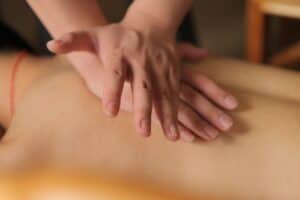

Deep Tissue – 6 Reasons

“How Deep Tissue Massage Releases Tight Muscles”
6 Good Reasons To Enjoy A Treatment

Muscle tightness and tension can be addressed using Deep Tissue Massage techniques and in today’s article I want to highlight the reasons it can work so well in helping to relieve muscular stiffness.

1 Circulation: Supplying muscles fibres with oxygen and nutrients as well as removing toxins such as carbon dioxide and lactic acid, is an essential physiological function that is going to help muscles to relax. Deep tissue massage, because it able to stimulate the deeper levels of muscle tissue, is very effective at dong just this. Also when a muscle fibre is tight, the blood flow automatically reduced and this contributes to the inability of the muscles to relax fully.

2 Scar Tissue: Scar tissue and adhesions will affect how muscles function and essentially how they stretch and contract. This ‘hardened’ tissue also affects the ligaments and tendons and can form around joints as well. Deep tissue approaches are able to literally move this hard tissue around, just a little, and this helps get the blood flowing and may contribute to the reduction of, or slowing down of, scare tissue formation.
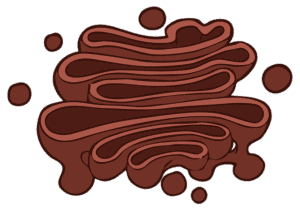
This is a graphic representing the Golgi apparatus – it helps to determine the tightness of muscles.

3 Reprogram the Golgi: With correctly applied tissue massage techniques, muscles and tendons can be appropriately stretched in a way that ‘resets’ a mechanism called the Golgi apparatus. This allows the muscle’s normal state to be, automatically, a little more relaxed than it was before the procedure. This also allows joint movement associated with that muscle to improve or increase. https://bscb.org/learning-resources/softcell-e-learning/golgi-apparatus/

This is how a muscle looks. Both the muscle fires and the tendon can be stretched with Deep Tissue Massage

4 Body Tension: If you have ever had a good massage treatment, then you would have experienced the relaxation that can result. So if that level of overall relaxation is maximised, than almost by default, there will be some degree of muscle release and muscle relaxation.

5 Posture: When I treat my clients with Deep Tissue Massage techniques, I am often addressing some postural issue as an underlying factor. Also mobilising restricted joints is another important part of my treatments. When we address both of these issues, muscle tension will be positively affected. In fact, if muscle tension is due to a restricted vertebral joint, for example, when the joint or joints are ‘loosened’ the muscles both around the vertebrae and in other posturally related areas, will begin to relax and tension released.

Improving joint mobility helps release muscle tension.

6 Range of Motion: Deep tissue massage has the techniques to help increase the mobility of joints. When a joint is moving more, then muscles associated with that joint, will stretch more and this in turn can help to relax the muscle that was previously tight.

So there you have it! Six good reasons to take advantage of this very specific form of massage treatment. Call the clinic now or book yourself in online. We’d love to see you. https://andrewjamesnaturopath.com/book-a-consultation/


References
Pictures
golgi-7104874_640
Image by https://pixabay.com/users/envandrare-20868295/?utm_source=link-attribution&utm_medium=referral&utm_campaign=image&utm_content=7104874
muscle-148107_640
Image by OpenClipart-Vectors from Pixabay
Image by https://pixabay.com/users/openclipart-vectors-30363/?utm_source=link-attribution&utm_medium=referral&utm_campaign=image&utm_content=148107
knee-2768834_640
Image by Angelo Esslinger from Pixabay
Image by https://pixabay.com/users/whitesession-4645995/?utm_source=link-attribution&utm_medium=referral&utm_campaign=image&utm_content=2768834

DIY Herbal Medicine To Support Your Nervous System

Herbal medicine and addressing the nervous system often go hand in hand as many herbs and natural remedies have been used for centuries to promote relaxation, reduce stress, and improve overall well-being. Very often when I am treating clients for various conditions, we have to address the nervous system as one of the underlying issues that is contributing to less-than-optimal health, healing and wellbeing.

In today’s Article I want to stir up a little bit of enthusiasm for herbal teas – a great DIY strategy that is often glossed over. Let me share with you a brief summary of some common herbs that you can pretty easily find so that you can take advantage of their medicinal properties, primarily as teas – an often underrated way of gaining all the goodness from herbal medicine.

But I want to reiterate what I just said which is the importance of the nervous system and the role it plays in your over all health. Of course it is important to find ways to relax and reduce stress and tension. Stating the obvious right? Please don’t just brush this aside thinking it is only herbal tea! And tea you can buy from a health food shop or your corner store.

“Herbal Teas Can Have Profound Positive Effect On Your Health”

So if you are not as well as you’d like to be, or you want to promote your health in some way, then DIY herbal teas are one place to start – and you really can’t go wrong!

Herbal Teas For Nervous System Health

Chamomile: Best known for helping the nerves to calm and to promote a relaxing sleep, chamomile is worth having on your shelf. It has been shown to have an effect on the central nervous system (1). Personally I don’t love the taste of Chamomile – I think I overdosed on it during my college years! So I like to blend it with something else that is relaxing. And that’s a good strategy to take generally. You want your herbal r=teas to taste nice of course, but when you are taking a health-focused DIY approach, then make sure the herbs you mix have a similar medicinal effect. (Chamomile and peppermint is not good for relaxation)

Lavender: I love this herb and use a lot of it in the skin products I manufacture at the clinic. As a herbal tea, a small amount is so nourishing on the nervous system helping to provide calm and balance. In herbal medicine I often prescribe it when there has been some sort of trauma – physical or emotional as well as for clients that are suffering anxiety.
Valerian Root: One of my favourite muscle relaxants which is very handy when stress and tension are felt physically in the muscles. I love the taste of this tea – the plant is rich in essential oils, iridoids, flavonoids, alkaloids, amino acids, and lignanoids, giving it the characteristic scent and taste (2).

Passionflower: Used as a herbal tea when you want to help induce sleep. Now I tell my clients, even when I have prescribed them a potent herbal tincture of something like Passiflora, that these herbs are not like taking a strong pharmaceutical sedative that will ‘knock you out’. No. When you take these herbs with the intention of sleeping better, they will have a physiological effect that is calming and sleep-promoting, but if you are sitting up watching some thriller on TV, then I’m sure you’ll remain wide awake! These herbs facilitate calm and relaxation.

Lemon Balm: I’m including this one because it is used a lot on herbal teas. It’s a great tasting one so can blend nicely with other herbs. It’s a more gentle relaxant, still valuable for sure, and it has the added benefit of helping to ‘calm’ the digestive system.
One study (3) showed that lemon balm had a positive effect on memory, judgment, and problem-solving – all associated with nervous system functioning.

Storage:
Please keep your herbal teas in an airtight container. If left exposed to the air the essential oils will evaporate the there will be oxidation of some of the active ingredients (4).

Concentration of Tea:
The safest (and easiest) way to have herbal teas is to buy them already in tea bags or prepared and packaged as loose leaf tea and to follow the recommendations from the manufacturer.

References

(1) Chamomile tea: Source of a glucuronoxylan with antinociceptive, sedative and anxiolytic-like effects
Pedro Felipe Pereira Chaves et al. Int J Biol Macromol Dec. 2020
https://pubmed.ncbi.nlm.nih.gov/32795578/
(2) Chemical Components and Cardiovascular Activities of Valeriana spp.
Heng-Wen Chen et al. Evid Based Complement Alternat Med. 2015
https://www.ncbi.nlm.nih.gov/pmc/articles/PMC4695638/
(3) Reviews of articles on medicinal herbs.
Wendy McLean, Australian Journal of Herbal & Naturopathic Medicine; National Herbalists Association of Australia (NHAA) Jun2023; v.35 n.2, 86-90. (5p)
(4) https://www.goodandpropertea.com/blogs/all/how-to-store-tea
Pictures
Lemon Balm
lemon-balm-770051_640
Image by congerdesign from Pixabay
https://pixabay.com/users/congerdesign-509903/?utm_source=link-attribution&utm_medium=referral&utm_campaign=image&utm_content=770051
Chamomile Tea
Image by congerdesign from Pixabay
chamomile-829220_640
https://pixabay.com/users/congerdesign-509903/?utm_source=link-attribution&utm_medium=referral&utm_campaign=image&utm_content=829220
Herbal tea Assorted
Image by gate74 from Pixabay
https://pixabay.com/users/gate74-5942741/?utm_source=link-attribution&utm_medium=referral&utm_campaign=image&utm_content=2519551
tribution&utm_medium=referral&utm_campaign=image&utm_content=770051

Massage Supports Immunity

The Four Key Ways Remedial Massage Supports Your Immune System

When thinking about ways to stimulate your immune response, there are times that a multi-faceted approach will serve you well. Over the years, as a homeopath & Naturopath I have treated many clients with immunological problems of one sort or another using natural medicines. Sometimes this is enough. There are times, however, that Remedial Massage can also contribute to a well-functioning immunity.
In this short article I want to cover four ways in which massage will help support and stimulate your immunity.

1: The Need To Reduce Cortisol

One of the more obvious ways Remedial massage can stimulate your immune system is because of the stress reduction that occurs with treatment. Increased stress means increased cortisol in your system and too much cortisol leads to increased vulnerability to illness and disease. This hormone is made in the adrenal glands in response to stress and helps your body to cope with these stressors. So we need some cortisol, but the problem is when we are chronically stressed, continuously high levels of the hormone plays havoc with your physiology – including your immunity. So with massage the levels are reduced and this contributes ton a feeling of relaxation and calm.
An interesting study (1) discusses how relaxation promotes immunity:

“Patients with cancer suffer a wide range of physical symptoms coupled with psychological stress. Moreover, cancer chemotherapy induces immunosuppression and consequently causes respiratory infections. Massage therapy has been reported to reduce symptoms in cancer patients via an increase in psychosocial relaxation and to enhance and/or improve immune function.”

2: Parasympathetic – WAY TO GO!

With a good therapeutic Massage Treatment, the nervous system is calmed. Many of us experience this after a treatment. So what’s happening is that your sympathetic nervous system is being ‘turned down’ and as a result of this, the parasympathetic nervous system becomes more dominant. Now what’s interesting here is that it is the sympathetic nerves that contribute to the production of cortisol and so levels are reduced when you are relaxed.

Diego reported in Moderate Pressure Massage Elicits Parasympathetic Response (2008) the effects of massage on the nervous system and its relaxation effects. (1)

“The article reports on the efficacy of moderate-pressure massage in increasing vagal activity and causing greater parasymphathetic nervous system (PNS) activity. Results of a study investigating the impact of massage on vagal activity and autonomic nervous system show higher level of responses, decrease in heart rate and blood pressure.”

Endorphins are also stimulated by remedial massage and unlike cortisol, a peak of endorphins is a great thing! They are stimulated by various things like laughter, exercise, excitement and Massage. These experiences lead to an increased sense of relaxation and we know relaxation (or less stress) stimulates the immune function.

3: Blood & Lymph Are Key

One of the more obvious effects of Remedial Massage is the stimulation of blood and lymph flow. Both of these things play a vital role in the functioning of a healthy immune response. Immune cells are transported throughout your body via the blood and lymph flow also helps direct where the immune cells go in your body. By stimulating blood and jymph flow, the immune function is supported.

4: Sleep – The Elixir Of Life

The final example of how Remedial massage helps your immunity, is that sleep can improve after treatments and we all know a good night’s sleep is a key driver of a well-functioning immunity. There is a lot of research these days showing the effect of broken sleep and how your health is adversely affected, including immune decline.

References:

(1)Leg massage therapy promotes psychological relaxation and reinforces the first-line host defense in cancer patients.
Noto Y et al. Journal of anesthesia [J Anesth] 2010 Dec; Vol. 24 (6), pp. 827-31.
(2)Moderate Pressure Massage Elicits Parasympathetic Response.
Diego, Miguel A. Massage Magazine. Oct 2008, Issue 149, p92-92. 2/3p.
pictures:
1: Immunity
defense-1403067_640: Image by Bruno from Pixabay
https://pixabay.com/users/bru-no-1161770/?utm_source=link-attribution&utm_medium=referral&utm_campaign=image&utm_content=1403067
2: Massage
https://pixabay.com/users/kian2018-9392571/?utm_source=link-attribution&utm_medium=referral&utm_campaign=image&utm_content=3666269. chinese-medicine-3666269_640